Mga Butas ng Bolt na Bato: Bakit Tinutukoy ng Pagbabarena Kung Kayang-kaya ng Bolt
A rock bolt is only as good as the hole it goes into. You can use the highest-grade steel, the best resin cartridge, and torque it to spec perfectly — and it will still fail if the hole was drilled at the wrong angle, through a fracture plane, or to the wrong diameter. The bolt depends on the hole. And the hole depends on the drill bit and drill rod that made it.
Roof bolting is the most common ground support method in underground mining and tunneling, and for good reason: it's fast, it's flexible, and it costs a fraction of what steel sets or shotcrete linings cost. But speed and low cost only work if the bolting is done right. Here's what dddhhhdone rightdddhhh means from the drilling perspective — before the bolt ever goes in.
Hole Angle: The Geometry That Determines Everything
A rock bolt works by anchoring into competent rock beyond the fractured or yielding zone, then applying tension to compress the loose rock against the stable rock behind it. For that to work, the bolt has to intersect the rock layers at the right angle.
The fundamental rule is that bolts should be installed perpendicular to the rock surface wherever possible. A bolt installed at an angle to the surface creates an asymmetric stress distribution — one side of the bolt is loaded more heavily than the other, the bearing plate doesn't seat flat, and the bolt's effective clamping force is reduced.
In bedded or laminated rock, the ideal bolt angle is perpendicular to the bedding planes, not necessarily perpendicular to the excavation surface. A bolt that runs parallel to the bedding does almost nothing — it's like trying to nail through the pages of a book from the spine. The pages can still slide past each other because the nail is oriented with the slip direction, not across it.
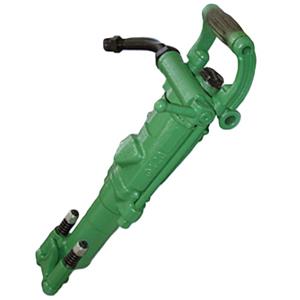
Drilling a hole at a precise angle, in a confined underground heading, with a hand-held drill, is harder than it sounds. The drill bit wants to walk when it first touches the rock. The operator is fighting the weight of the drill. The ground might be irregular where the collar is marked. And if the first few centimeters of the hole are off-angle, the rest of the hole will be too — you can't steer a tapered drill rod once it's in the rock.
The fix is in the setup: mark the hole location clearly, position the drill so the rod is at the target angle before the bit touches rock, and start the hole with light feed pressure and low rotation speed until the bit has established a clean collar. Those first few seconds of drilling determine whether the bolt that goes into that hole will do its job.
Hole Depth: Don't Stop at the Fracture
A bolt hole that's too shallow — that stops inside the fractured or weathered zone instead of reaching solid rock — is a bolt that's anchored in material that can't hold it. The first time the ground shifts, the anchor point moves with it, and the bolt loses tension.
The required hole depth is determined by the bolt length, which is determined by the geology. The bolt needs to extend at least 0.3 to 0.5 meters beyond the estimated fracture zone into competent rock. If the fracture zone is 2 meters thick, you need at least a 2.5-meter bolt — and the hole needs to be deep enough to accommodate the full bolt length plus the resin cartridge.
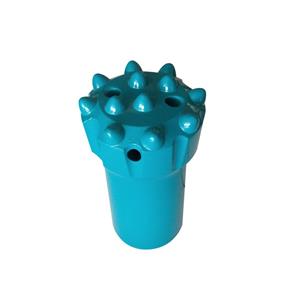
This sounds obvious. What's less obvious is that the hole depth requirement has implications for your drill bit and drill rod selection. A deep bolt hole — 3 meters or more, which is common in large-opening mines — needs a drill rod long enough to reach that depth without adding extensions mid-hole. It needs a bit that can drill straight at that depth without wandering. And it needs flush flow strong enough to clear cuttings from a hole that's longer than the operator is tall.
Fracture Zones: The Hole You Can't See
The worst bolt hole is the one drilled straight into a fracture plane and coming out the other side into loose ground. The bolt goes in, the resin sets, everything looks fine — and the first time the ground loads up, the bolt pulls out because it was anchored in a block that wasn't attached to anything solid.
The driller's responsibility is to pay attention to what the drill is saying. When the bit hits a fracture zone, the penetration rate changes — usually it speeds up as the bit breaks through into open or broken ground. The drill sound changes — the impact becomes less crisp, more hollow. The flush return might drop as flush water or air leaks into the fracture instead of returning up the hole.
Any of these signals means the hole has intersected a significant fracture. If it happens near the target depth, the bolt might still be viable — the fracture might be above the anchor zone. If it happens earlier, the hole needs to be abandoned and re-drilled at a different location or angle. Continuing to drill into a fracture zone and installing a bolt there is installing a bolt that's already compromised.
Resin Bolting: The Chemistry That Demands Clean Holes
Resin-anchored bolts — the most common type in modern mining — rely on a two-part resin cartridge that's inserted into the hole ahead of the bolt. When the bolt is spun into the hole, it ruptures the cartridge, mixes the resin and hardener, and the mixture sets around the bolt to form a chemical anchor.
For the resin to bond properly, the hole wall needs to be clean. Rock dust, drill cuttings, or mud left in the hole from drilling will prevent the resin from making full contact with the rock, reducing the bond strength. A hole that's full of cuttings will also prevent the resin from flowing into the annular space between the bolt and the hole wall — the resin gets pushed out of the hole rather than into the gap.
The solution is adequate flush flow during drilling and a final purge after the hole reaches depth. Run the flush water or air for an extra few seconds after the bit stops advancing to clear any remaining cuttings from the hole. It takes seconds and significantly improves the reliability of the resin bond.
The Drilling-Bolting Connection
Rock bolting and rock drilling are usually managed by different crews — the drillers make the holes, the bolters install the bolts. But the quality of the bolting is determined at the drilling stage. A bolt installed in a poorly drilled hole — wrong angle, wrong depth, dirty hole walls — will fail regardless of how carefully it's installed.
For the driller, this means understanding that those bolt holes aren't just holes. They're the foundation of the ground support system, and the drill bit and drill rod that made them are the first link in the safety chain.